PRP Facial Benefits: What Can a PRP Facial Actually Improve?

Someone takes a small sample of blood from your arm. Then they put that blood on your face. And you pay a few hundred pounds for it.
That is a PRP facial in three sentences. You scroll Instagram and everyone's talking about that glow they got from PRP. But honestly? Half the claims online are overblown. Let's be real about what actually happens.
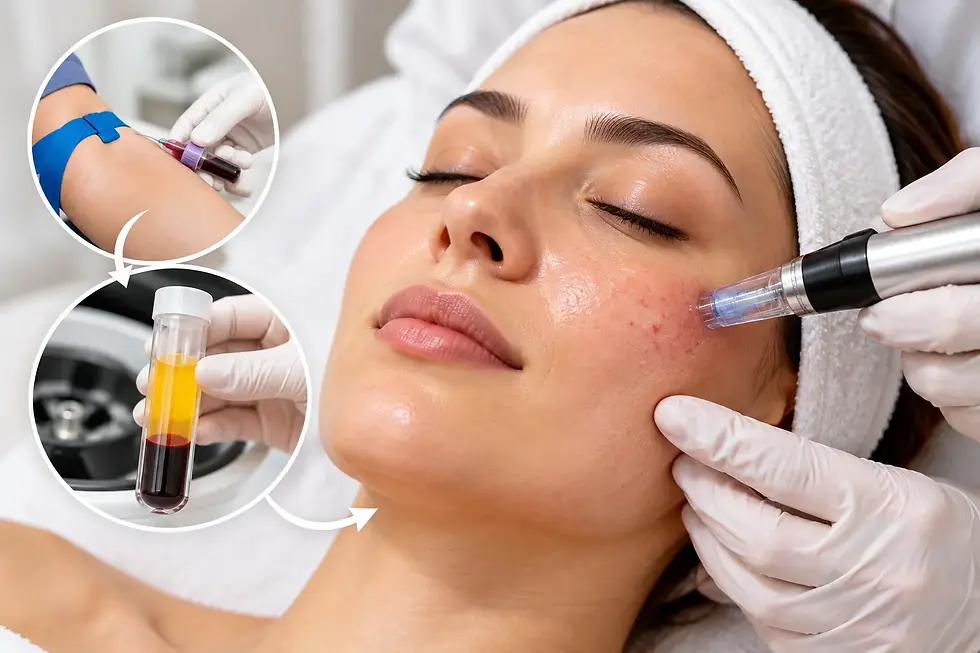
First, What Is a PRP Facial?
Right, so PRP is just platelet-rich plasma. Fancy name for something that's actually pretty straightforward. They take a tiny bit of your blood from your arm, spin it around in a machine, and basically use the good bits.
The sample is spun in a machine called a centrifuge. This separates the plasma, which is full of platelets, from the rest of your blood. Platelets carry growth factors. These are signals that tell your skin to repair itself.
The plasma is then either injected or applied to the skin. Most often it goes on after microneedling. That way it sinks in through the tiny channels the needles make. That is why you will hear it called a "vampire facial".
Here Is What a PRP Facial Can Improve
Let's take the common claims one by one.
Skin texture and tone
This is where PRP skin rejuvenation gets its best reviews. Look, clinics will tell you it gives you brighter skin and smoother texture. And that's... kind of true? But it's not like you'll look completely different.
You know those rough bits on your skin, the dull patches, uneven tone? That's what it helps with. Not a facelift. Just you, but better.
Fine lines
Does it help with fine lines? Yeah, especially around the eyes. The growth factors basically tell your skin to make more collagen. Which is good. But deep wrinkles? Not touching those.
But notice the word "soften". Deep wrinkles and folds will still be there.
Acne scars
Some clinics say PRP can fade shallow acne scars. It is slow work, though. One UK guide says acne scars almost always need three or more sessions.
Deeper scars take longer still. So be patient, and be honest with yourself about what kind of scar you have.
Firmness (PRP for skin tightening)
More collagen and elastin should make skin a little firmer and bouncier. That is
the idea behind PRP for skin tightening.
The key word is "little". Cleveland Clinic and University Hospitals both say the results are subtler than surgery. If your skin sags a lot, PRP will not lift it.
Glow and hydration
Many people notice their skin looks fresher and more plump after a few weeks. This is the benefit clinics talk about most. It is also the hardest to measure.
The under-eye area
PRP is sometimes used under the eyes too. Some UK clinics offer it as a separate treatment. The skin there is thin, so ask who does it and how often they have done it.
What a PRP Facial Will Not Do
Let's be clear here, because many websites are not.
It will not replace a facelift. It will not fill deep lines like filler does. And it will not give you a different face by Friday.
If a clinic promises a dramatic change in one visit, walk out.
Do the PRP Facial Benefits Have Proof Behind Them?
Here is the part most blogs skip. The science is promising, but it is not solid yet.
Several reviews say people are usually happy with the results. Studies also show more collagen in the skin after treatment. That is good news.
But the studies are small. Clinics prepare PRP in different ways. And follow-up is often short.
One overview of 13 systematic reviews said the evidence was not strong enough for firm conclusions. Another trial compared PRP with vitamin C. Both improved the skin, but the gap between them was not significant on most measures.
So here is the honest summary. PRP probably helps, gently. How much it helps you is hard to promise.
PRP Facial Results: How Long Do They Take?
Don't judge it on day two. Don't book this before a big event. Your face gets red, like a bad sunburn. Might swell, might bruise. Yeah, it goes down after a day or two, but it's not invisible.
The real PRP facial results come slowly. One London clinic says you should see changes from about three weeks. They keep improving after that.
Real talk: most clinics want you back three times. Spaced four to six weeks apart. Then you're topping up every six to twelve months if you want to keep it going. Which is a commitment.
Aftercare matters too. Avoid the sun for a bit. Don't go in saunas or hot yoga. Just be sensible. Use decent sunscreen.
What Does a PRP Facial Cost in the UK?
Prices change from clinic to clinic. But UK price guides give a rough idea.
Single session? Anything from £150 to £500 depending on the clinic. With microneedling, add another £100 to £250. A course of three? Usually around £500 to £1,500. London's dearer obviously. London costs more. One guide says London clinics charge 50 to 70 percent more than clinics outside the capital.
Here is a tip. Microneedling on its own costs less. PRP adds roughly £100 to £250 per session. One price guide says the extra benefit of PRP is mixed. So ask your clinic why PRP is right for your skin, not just what it costs.
Who Should Skip It (or Ask a Doctor First)
Good news: it's your own blood, so allergic reactions basically don't happen. But it's not for everyone. Some people shouldn't get it at all.
Tell your practitioner if any of these apply to you:
You take blood thinners or have a bleeding disorder
You have a low platelet count
You are pregnant or breastfeeding
You have an active skin infection or cold sore
You have cancer or a condition that weakens your immune system
You smoke
If you get cold sores, say so. Microneedling can trigger a flare-up.
Common Mistakes People Make With PRP Facials
Expecting a facelift. PRP is a gentle treatment. Go in expecting better skin, not a new face.
Booking one session and giving up. One visit can give a glow. Most other changes need a course.
Skipping sunscreen. Your skin is healing. Sun on freshly treated skin is a bad idea.
Taking painkillers without asking. Some medicines, like ibuprofen, and things like alcohol can get in the way of healing. Ask your clinic what to avoid.
Choosing on price alone. The cheapest deal is not always the safest. A blood draw and needles need clean, careful work.
Not asking questions. Who does the treatment? How is the PRP prepared? How many sessions will you need, and why?
So, Is It Worth It?
If you want subtle improvements in how your skin looks and feels? Yeah, do it. Want a dramatic lift? That's not PRP. Go get filler or something else.
The best next step is a short chat with a practitioner who looks at your actual skin. Live in south London or Surrey? At Tama Aesthetics in Wallington lists PRP and microneedling under skin rejuvenation. You can book a consultation to ask your questions first.
Go in with questions. Come out with a clear plan.
FAQs
What are the main PRP facial benefits?
The main PRP facial benefits are smoother texture and a brighter tone. You also get softer fine lines and a little more firmness. It may also help with shallow acne scars over several sessions. The results are gentle, not dramatic.
How long do PRP facial results last?
There is no fixed answer. Results build over a few weeks. You'll need maintenance. Top up every six to twelve months or the results fade. How long yours last depends on your skin, age and lifestyle.
Does a PRP facial hurt?
They numb you first, so it's not painful exactly. More annoying than anything. Pinching feeling. A bit of tingling. But yeah, most people handle it fine. Just ask your clinic what they use.
Is a PRP facial safe?
It's pretty safe because it's literally your own blood. Side effects? Redness, swelling, bruising. Standard stuff. But go to someone who actually knows what they're doing and tell them your full health history.
Can PRP tighten sagging skin?
A little. PRP can make skin feel firmer over time. But it cannot lift heavy sagging the way surgery can.
How many PRP facials do I need?
Most UK clinics suggest three, about four to six weeks apart. Then a yearly or twice-yearly top-up if you want to keep the results.
Is PRP better than microneedling alone?
Not always. Microneedling alone already helps texture and scars. Evidence for the extra PRP benefit is mixed, so ask your clinic why they suggest it for you.
Comments